2026 Fall Pilot Program: Buy PD, Get Curriculum Free!
November 23, 2026
In January 2026, Hello World surveyed 765 K-12 students across the United States about how they are encountering and using AI. The results show a generation that already lives with AI: 47% use it daily or multiple times a week, and 61% question or double-check AI when an answer seems wrong. But most of that use happens at home, and many students are building their AI habits without consistent guidance from the adults around them.
This report is based on responses from 765 K-12 students collected in January 2026 through a Hello World student survey: 182 elementary, 418 middle school and 165 high school students, representing a range of learning contexts and experiences with AI both in and out of school.
Students were asked about how often and where they use AI, how it affects their learning, how much they trust it, how they feel about it, and what they think it will mean for the future. The survey was not designed to assess academic performance, instructional quality or skill mastery.
The results capture student perspectives at a moment in time. They are self-reported and descriptive, not causal, and shouldn't be read as evidence that AI improves or harms learning. What they offer is rare insight into how AI is actually showing up in students' lives, grounded in their experience rather than adult assumptions.
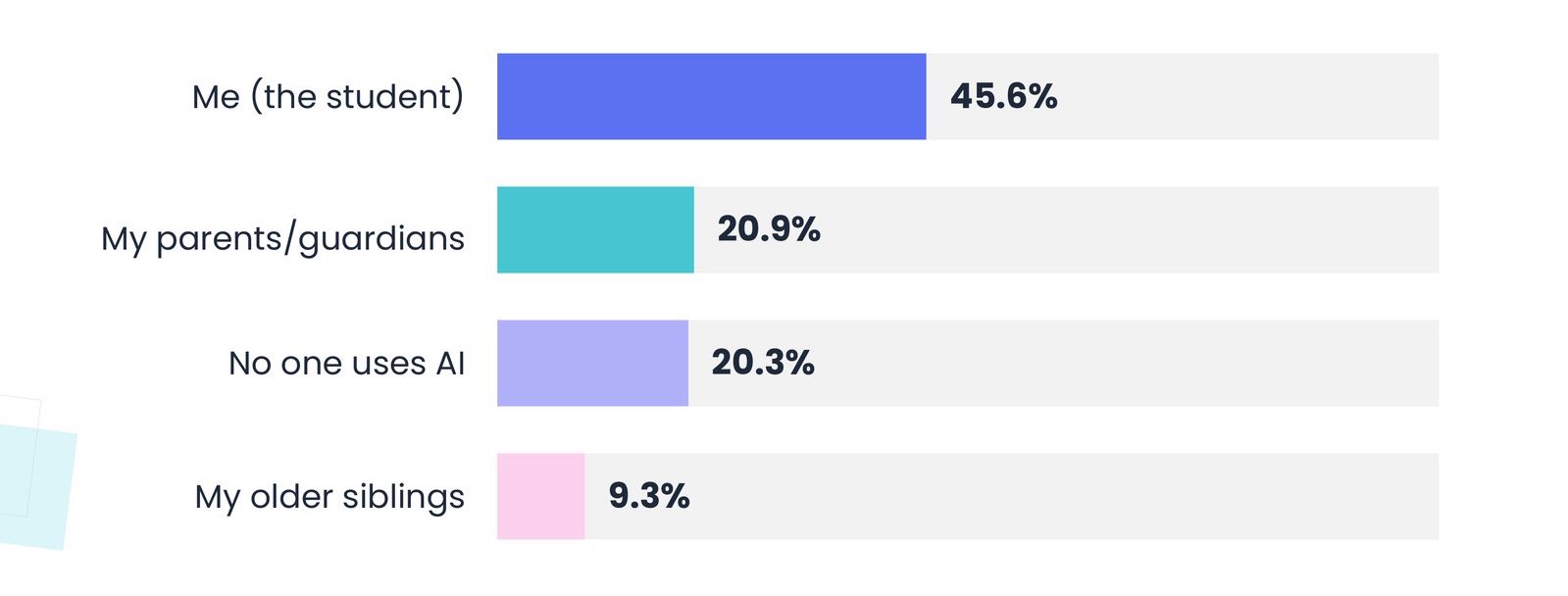
Nearly half of students (47%) use AI daily or multiple times a week, and most of that happens outside school. At home, students are the most frequent AI users in their household: 45.6% say they use AI the most, ahead of parents or guardians (20.9%) and older siblings (9.3%). One in five (20.3%) say no one at home uses AI.
Among students who use AI at school (439 students), the most common use is homework help (45%), followed by class projects (24%), coding and computer science (21%), and writing or storytelling (10%).

70% of students use AI most at home. Only 30% use it most at school.
Students are forming AI habits faster than the adults around them are setting expectations. At school, 53% say the rules about AI are very clear and another 24% say they're somewhat clear, but 14% say there are no rules and 9% find them unclear. At home the picture flips: half of students (50%) say there are no rules about AI at all, and only 26% say the rules are very clear.
Students aren't taking AI at face value. 61% say they question or double-check AI when an answer seems wrong. Asked whether they usually trust what AI tells them, the largest group said "sometimes" (36%), followed by "most of the time" (30%). Only 10% said they always trust it.
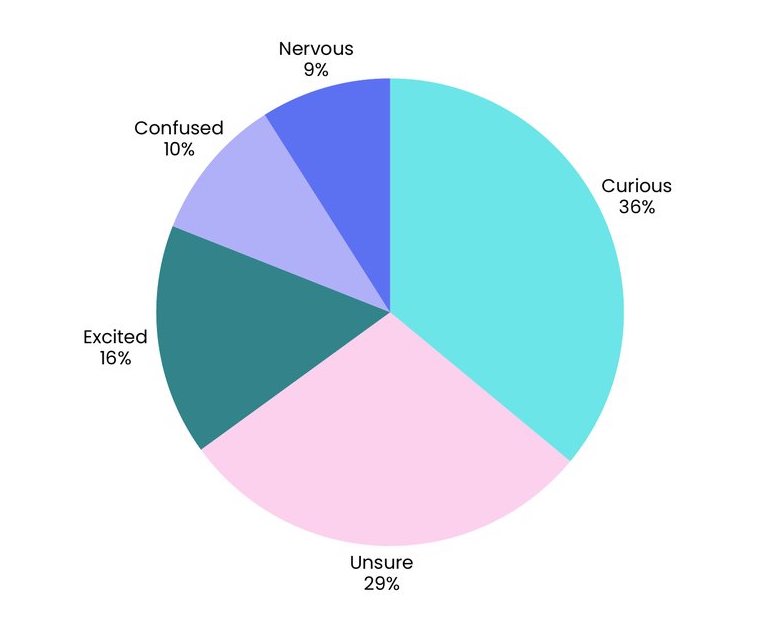
Students most often describe their feelings about AI as curiosity (36%) or uncertainty (29%), rather than strong positive or negative reactions. Smaller groups feel excited (16%), confused (10%) or nervous (9%), which suggests many students are still forming their attitudes.
Asked to finish the sentence "AI makes learning feel…", 41% of students chose easier and 22% chose more interesting. A quarter (25%) said it makes no difference, while 6% said more confusing and 6% more stressful.
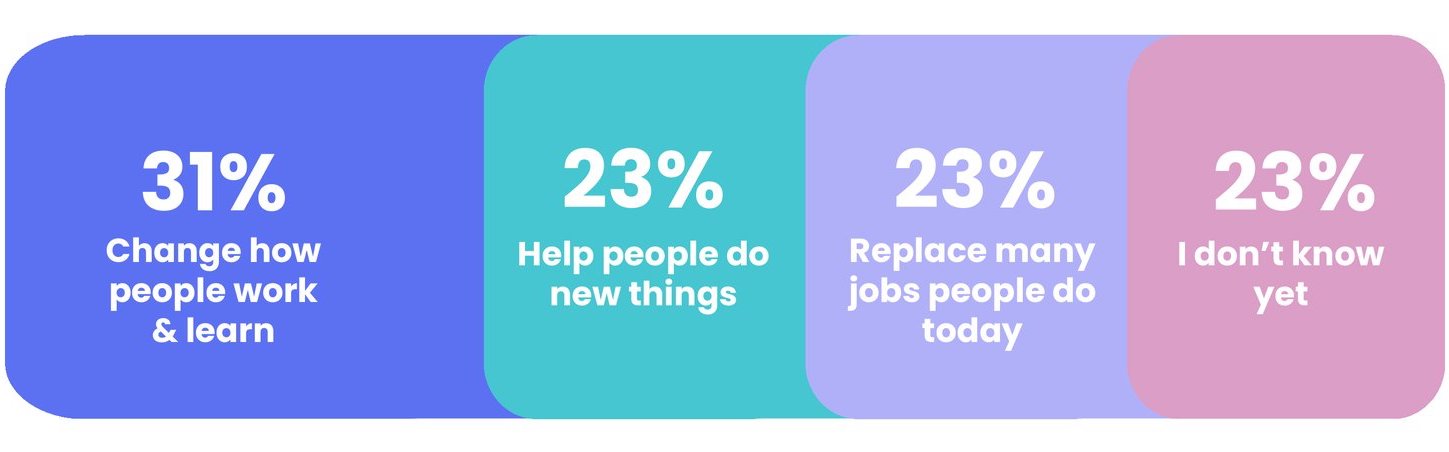
There's no consensus. 31% think AI will change how people work and learn, while 23% each think it will help people do new things, replace many jobs people do today, or say they don't know yet.
This survey reveals a generation already living in an AI-augmented world. The good news: students are approaching AI with curiosity and critical thinking. The challenge: many are navigating it without clear guidance or adequate support from schools. There's a narrow window for educators and families to provide proactive guidance before student habits solidify on their own.
Get the complete Student Voices on AI: Spring 2026 survey results, including every chart and the full methodology.