2026 Fall Pilot Program: Buy PD, Get Curriculum Free!

In high school, students are ready to analyze, question, and apply artificial intelligence at a deeper level.
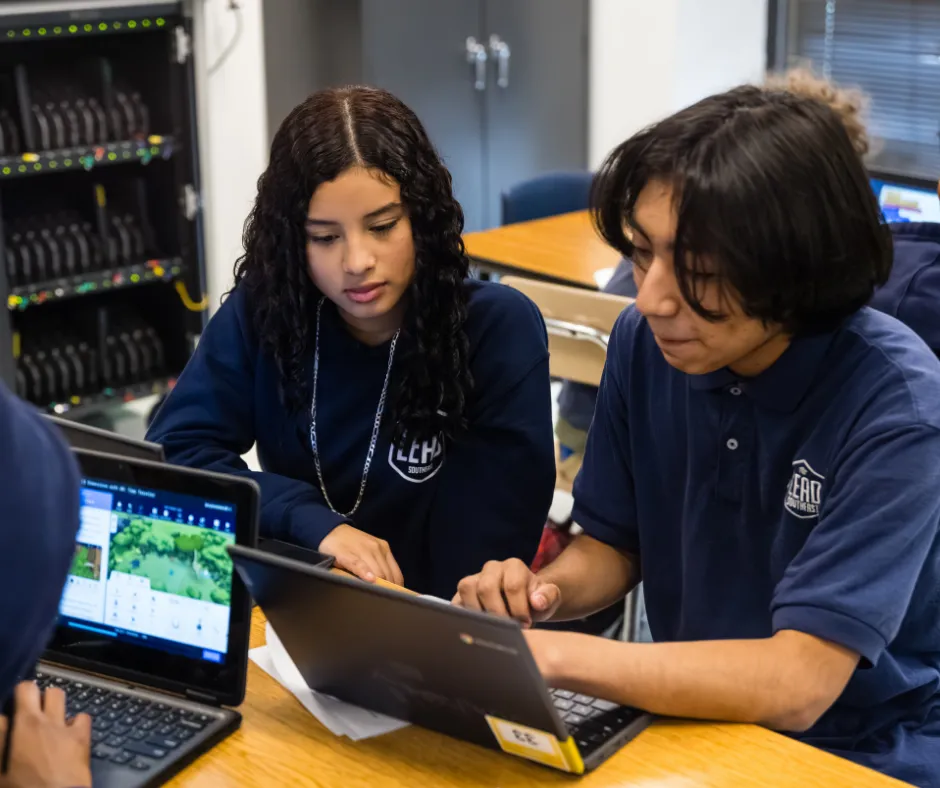
Hello World CS’s AI curriculum challenges them to explore how AI systems make predictions, why data matters, and what responsibilities come with creating and using intelligent technologies. Students apply AI by creating in-depth, real-world applications through data science, Python programming, and advanced AI concepts.
With this curriculum, educators gain the framework to teach both how AI works and how to use it responsibly.
This high-school curriculum empowers students to become informed and skilled AI users who understand both its potential and limitations.
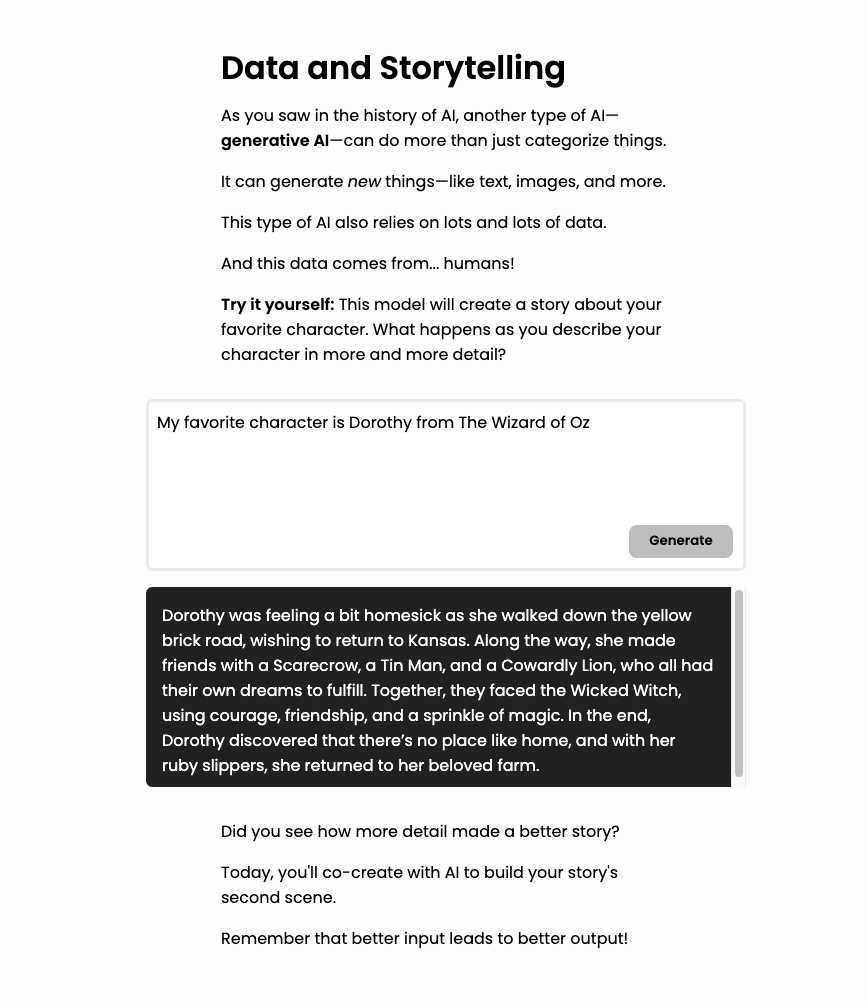
This AI Literacy and Readiness program introduces students to foundational AI concepts through creative projects and storytelling. In these standalone modules, students dive into the world of AI, learning to use AI creatively and responsibly. Students design and implement their own AI-driven block-based programs to build their stories, and become AI Power Users.


High school AI literacy goes deeper on how systems work: data, algorithms, pattern recognition, and how models make predictions. It also takes on more sophisticated ethical analysis, responsible independent use of AI tools, and career connections. Hello World's Data Science & AI course (grades 8-12) teaches these fundamentals through Python. Students analyze real datasets, build algorithms, and create working tools like handwriting recognition and autocorrect, alongside projects like urban bike share planning.
Both models work, and many schools do both. A standalone AI course reaches students who won't take a full CS pathway and can go deep on ethics and societal impact. Integrating AI into existing CS courses reaches every CS student and grounds AI in programming knowledge they already have. Hello World supports both: AI History Museum and AI Career Convos work as standalone modules, while Data Science & AI is a full course that follows Intro to Python.
Clear, subject-specific policies beat blanket bans, which are unenforceable and leave students without guidance. AI literacy instruction is the foundation: students who understand how AI works, where it fails, and why the learning process matters make better decisions about using it. Hello World's student Code of Ethics sets expectations for integrity and honesty, and its courses model responsible use by having students co-create with AI rather than offload work to it.
AI skills are now listed in job postings across industries, not just software: marketing, healthcare, finance, trades. Colleges increasingly expect students to use AI tools responsibly. Students who graduate knowing how to evaluate, direct, and think critically about AI have a durable advantage. Hello World's AI Career Convos has students build their own career pathway, exploring roles from vet technician to graphic designer, and Data Science & AI gives them portfolio-ready Python projects.
Algorithmic bias and fairness, data privacy, misinformation, intellectual property and authorship, and labor and economic impacts. Strong ethics curriculum uses real cases and asks students to analyze tradeoffs rather than delivering a list of rules. Hello World's AI History Museum has students build and interact with characters while exploring the history of AI, tackling privacy and bias, and considering AI's impact on society. Ethics is woven through every Hello World AI course, not confined to one unit.
Both. Students who have built a model, tested it, and watched it fail on edge cases understand AI limitations in a way no lecture can teach. In Hello World's Data Science & AI course, students write Python to build pattern recognition and text prediction tools themselves. In the AI literacy modules, they program AI-enabled characters and environments. Either way, students experience AI as something they can construct and critique, not just consume.
Hello World's high school AI pathway runs from the AI literacy modules (AI Story Studio, AI Book Hook, AI History Museum, AI Career Convos) through Intro to Python to Data Science & AI. Every district partnership includes professional development with a dedicated PD specialist and year-round support. Teachers can start free, or districts can request a pilot.