Python Curriculum

Intro to Python

  • Grades 7-11
  • Year-round

Students are introduced to text-based programming through creative, hands-on projects.

Intro to Python
Grades 7-11
Python
CSTA 6-8
CSTA 9-10
Text-based
Python

Course Overview

Students build interactive stories, games, chatbots, and other applications while learning core coding concepts in Python. They develop skills in sequencing, variables, conditionals, loops, lists, and functions, progressing from simple programs to more complex, modular designs. The course fosters computational thinking, problem-solving, and creativity, giving students a strong foundation in one of the world’s most popular programming languages. No prior coding experience is required.
No items found.
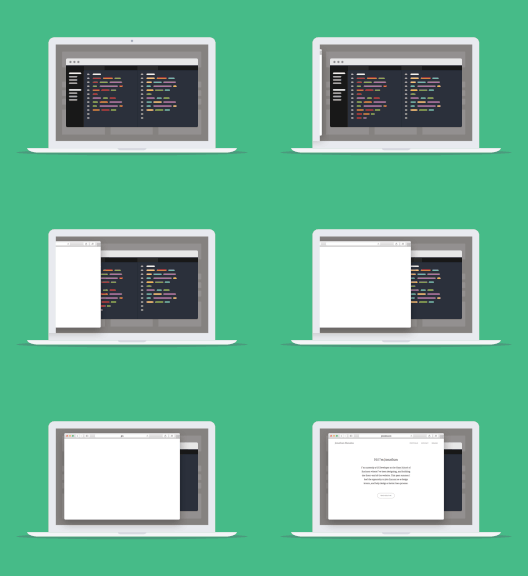
Example Project: 
Interactive Story

Learning Goals

Students will:
  • Learn and apply core programming concepts including sequencing, variables, conditional logic, loops, lists, and functions
  • Design and build text-based programs using Python
  • Use computational thinking to plan, organize, and refine program logic and structure
  • Collaborate on team-based projects and coding challenges
  • Apply testing, debugging, and iteration to improve program outcomes
  • Use comments and code structure to make Python programs clear and understandable

Join the Fall Pilot

Get Started

CSTA Alignment

Intro to Python is aligned to the CSTA 6-8 and 9-10 Computer Science Standards. The course provides opportunities for students in Grades 6-10 to build a strong foundation in programming, algorithms, and problem-solving through text-based coding. Projects foster creativity, computational thinking, and practical programming skills using one of the most widely used programming languages.

Curriculum Standards Alignment

Course Resources

Projects include resources to...

Lesson Plans

Provides pacing suggestions, key vocabulary, discussion prompts, and differentiation tips to support student choice while ensuring alignment with learning goals.

Teacher Slides

These student-facing slides walk students through each phase of the project and include embedded prompts, key concepts, and workbook activities.

Project Example

Helps teachers support students, model expectations, demonstrate creative possibilities and accurate use of the code.

Example Code

Supports debugging during instruction and offers a reference point for students building their own projects.

Project Rubric

Aligned to the project's learning objectives and includes grading criteria for creativity, collaboration, and technical proficiency.

Student Workbook

Students use workbooks (print or digital) to record their project ideas, explain their coding choices, and reflect on what they've learned.

View All Curriculum

Sign up for free this school year!

Get access to free projects now, or schedule a call for a district-wide deployment.