Computer Science Foundations

CS Breakthroughs with VR

  • Grades 3-5
  • Year-round

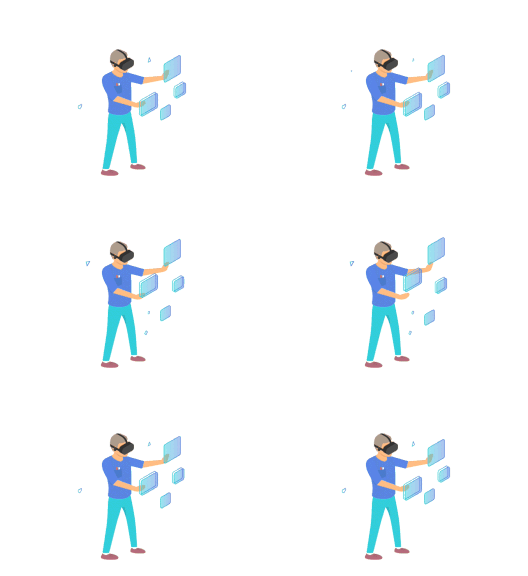
Build 3D worlds and games in VR while learning coding concepts like loops and variables.

CS Breakthroughs with VR
Grades 3-5
CoBlocks
CSTA 3-5
Block-based
CoBlocks

Course Overview

CS Breakthroughs with VR introduces students in Grades 3-5 to key computer science concepts through playful, creative virtual reality projects. Using CoBlocks, students design interactive 3D worlds and simple games while building confidence with events, loops, variables, and conditionals. The course encourages curiosity, collaboration, and responsible technology use through a flexible mix of guided, team, and independent projects. No prior coding experience is required.
No items found.
Example Project: 
Obstacle Course

Learning Goals

Students will:
  • Build interactive 3D scenes and simple games using CoBlocks
  • Learn key computer science concepts, including events, loops, variables, and conditionals
  • Apply computational thinking to solve problems and bring creative ideas to life
  • Develop digital citizenship skills and understand how to use technology safely and responsibly
  • Explore how computing systems and technologies impact their world
  • Practice collaboration, creativity, and communication through guided, team, and independent projects

Join the Fall Pilot

Get Started

CSTA Alignment

CS Breakthroughs is aligned to the CSTA 3-5 Computer Science Standards, introducing young learners to foundational concepts such as computing systems, algorithms, programming, and responsible computing. Lessons and projects build early computational thinking and problem-solving skills in line with grade-appropriate CSTA expectations.

Curriculum Standards Alignment

Course Resources

Projects include resources to...

Lesson Plans

Provides pacing suggestions, key vocabulary, discussion prompts, and differentiation tips to support student choice while ensuring alignment with learning goals.

Teacher Slides

These student-facing slides walk students through each phase of the project and include embedded prompts, key concepts, and workbook activities.

Project Example

Helps teachers support students, model expectations, demonstrate creative possibilities and accurate use of the code.

Example Code

Supports debugging during instruction and offers a reference point for students building their own projects.

Student Workbook

Students use workbooks (print or digital) to record their project ideas, explain their coding choices, and reflect on what they've learned.

View All Curriculum

Sign up for free this school year!

Get access to free projects now, or schedule a call for a district-wide deployment.