2026 Fall Pilot Program: Buy PD, Get Curriculum Free!
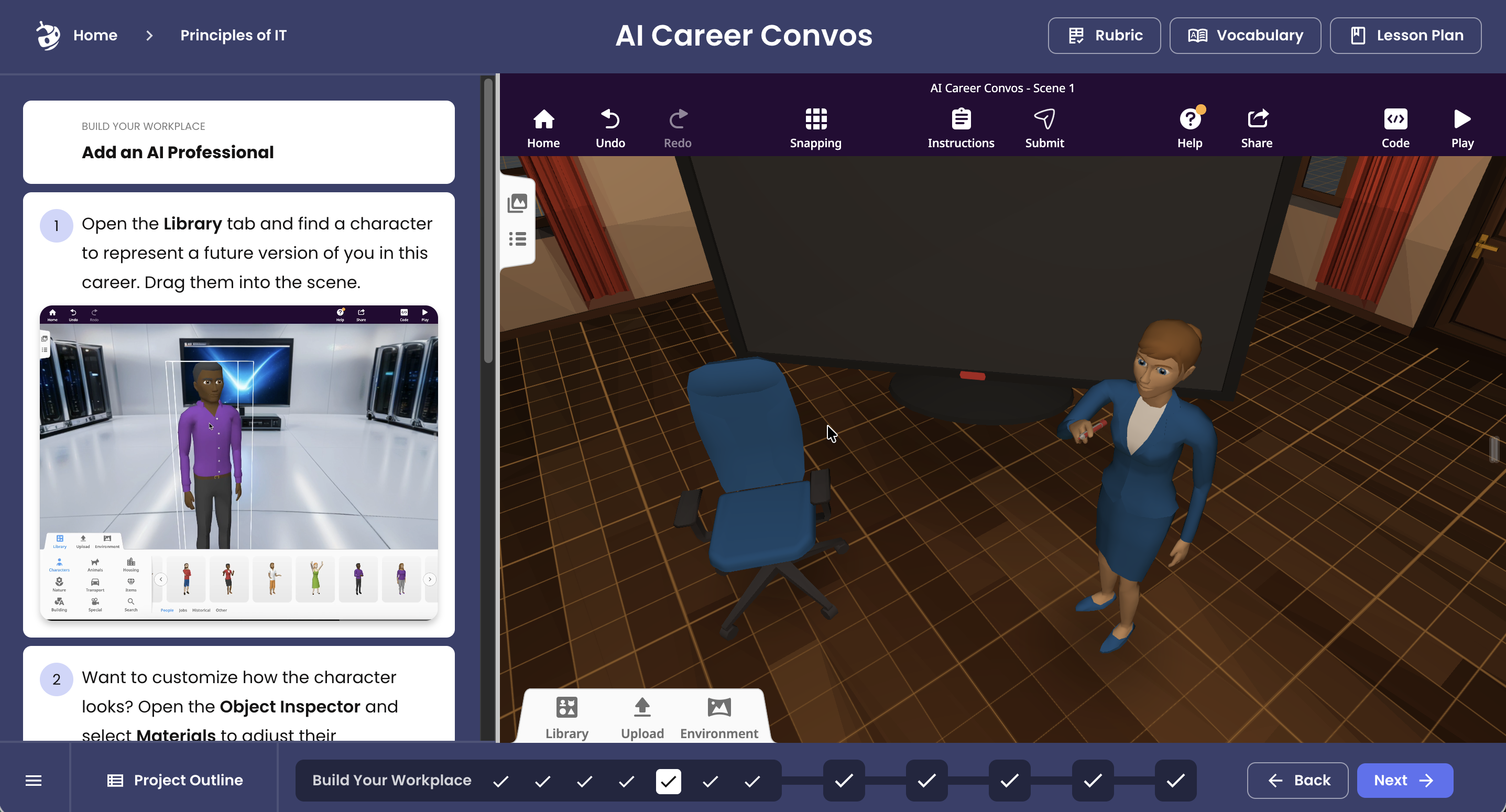
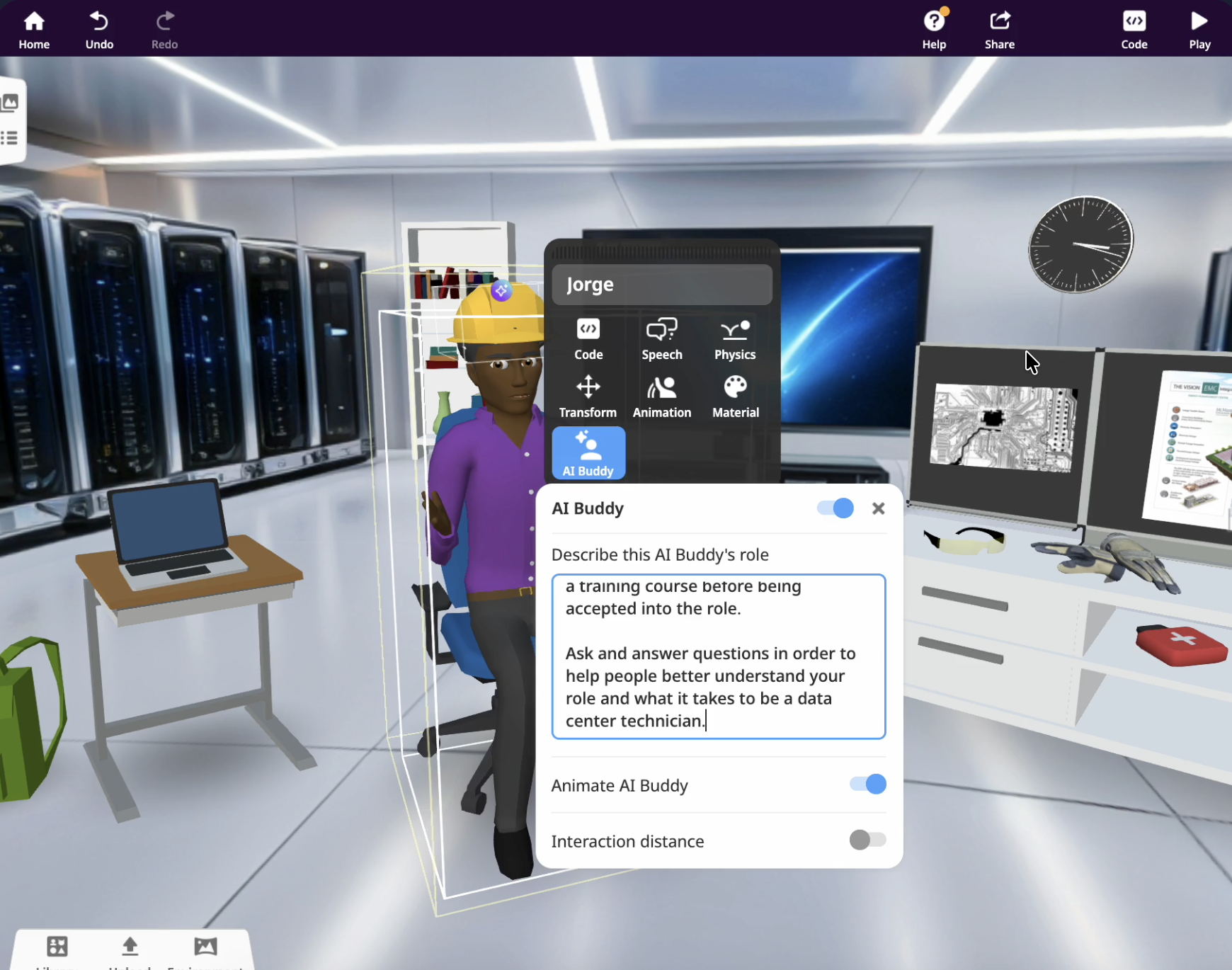
Students explore a career by building it—designing a 360° workplace and configuring an AI professional to interview, ending in a Career Fair.
AI Career Convos is aligned to the CSTA K–12 Computer Science Standards, with emphasis on Impacts of Computing and AI literacy within our full K-12 AI literacy curriculum. Students explore how AI systems process instructions, critically evaluate AI as an information source, and apply computing tools to build interactive, personally meaningful projects.

Provides pacing suggestions, key vocabulary, discussion prompts, and differentiation tips to support student choice while ensuring alignment with learning goals.

These student-facing slides walk students through each phase of the project and include embedded prompts, key concepts, and workbook activities.

A student guide for Session 3's Career Fair, with structured prompts for each career booth visited.

Three pre-built AI Career Convos examples (Vet Technician, Elementary School Teacher, and Graphic Designer) for use as extra Career Fair booths or a class demonstration.


A career pathway is a connected sequence of education, training, and work experiences that leads from where a student is now to a specific career field. Pathways group related jobs so students can see how an interest (say, animals or design) connects to real roles, the skills those roles need, and the steps to get there. Hello World's AI Career Convos course for grades 6-12 has students explore pathways by interviewing AI-powered characters about their careers and then building a pathway of their own.
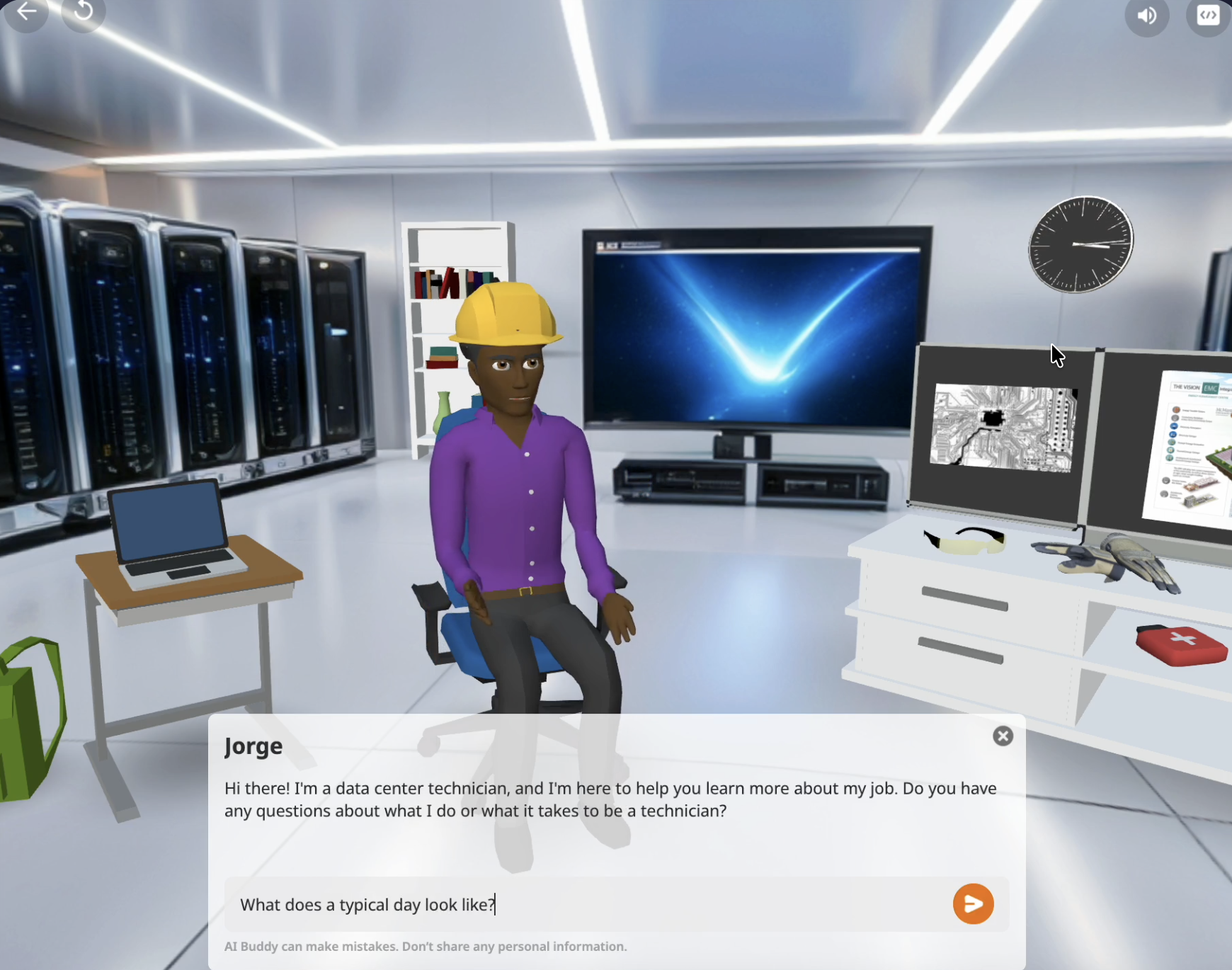
Health science (nursing, veterinary technician, medical imaging), information technology (network support, web development, cybersecurity), education and training (teacher, school counselor, curriculum designer), and arts and communication (graphic designer, video producer) are common examples. In AI Career Convos, students meet characters like a vet technician, an elementary school teacher, and a graphic designer, ask them questions, and learn what a day in each job actually looks like.
It depends on the framework. The National Career Clusters Framework used by most U.S. schools historically organized careers into 16 clusters and 79 pathways; a 2024 modernization reorganized it around 14 clusters. States and organizations group pathways differently, which is why you'll see references to 4, 5, 6, or 7 pathways in different programs. The number matters less than the idea: careers cluster around shared skills, and students can move between related roles.
Clusters are the broad categories (Information Technology, Health Science, Education & Training). Pathways are the more specific routes inside each cluster (within IT: network systems, programming and software development, web and digital communications). Students usually start by identifying a cluster that fits their interests, then narrow to a pathway. AI Career Convos supports that narrowing by letting students explore many roles quickly.
Because students make course choices in 8th and 9th grade that shape what's available to them later, often without knowing what careers those choices connect to. Pathway exploration in middle school gives students a reason to care about their classes and helps them choose electives, CTE programs, and dual credit deliberately. Starting in grade 6, AI Career Convos gives students that exposure early.
AI lets students have a realistic conversation with a "professional" in any field, at any time, without scheduling a guest speaker. They can ask what the job pays, what a bad day looks like, what classes helped, and what they'd do differently. In AI Career Convos, those conversations happen inside Hello World's platform with built-in AI safety layers, and students turn what they learn into their own career pathway plan.
Interests and strengths, the education required and its cost, projected demand for the field, work environment and schedule, and how much a pathway allows movement into related roles later. The course has students weigh these for the careers they explore, which is a more durable skill than picking one job at age 13.